
What is sheet metal bending
Sheet metal bending is a mechanical process that enables sheet metal to be permanently deformed along a straight line, creating angles, bends and three-dimensional geometries.
It is one of the most common processes in the light and medium-light metalworking sector, ideal for producing functional and structural components.
With our CNC press brakes, we carry out high-precision bending on steel, stainless steel, aluminium and special alloys, ensuring maximum repeatability even on medium to large batches.

Processable metals and the bending process
Processable Materials
• Carbon steel
• Stainless steel (AISI 304, 316, etc.)
• Aluminium and light alloys
• Galvanised sheet metal
Processable Thicknesses
• Carbon steel: from 0.5 mm to 6 mm
• Stainless steel: from 0.5 mm to 4 mm
• Aluminium: from 0.5 mm to 5 mm
Technical Specifications
Our sheet metal bending solutions are based on advanced machinery capable of processing materials of various types and thicknesses. We use press brakes with capacities of up to 100 tonnes and a bending length of up to 3 metres, ideal for precision bending of large formats. In addition, we use Salvagnini panel benders for complex bends on sheet metal up to 2 metres in length and thicknesses of up to 2 mm.
Processable materials include carbon steel, stainless steel, aluminium and light alloys, ensuring flexibility and high-quality processing. Our technologies guarantee precise, repeatable results, optimised for every industrial requirement.
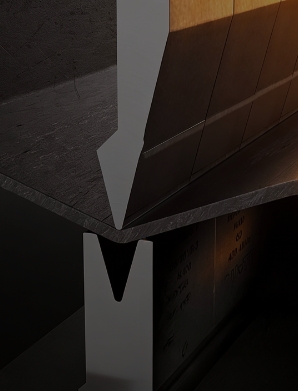
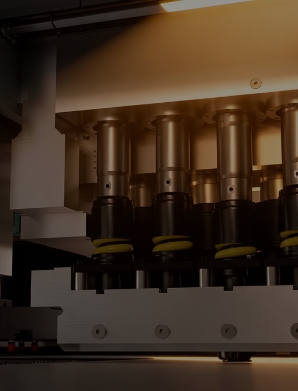
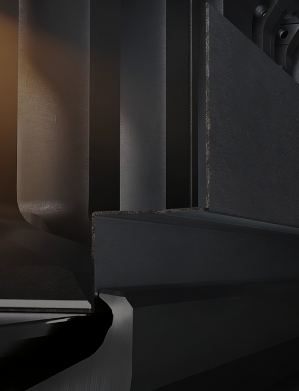
Dedicated Sheet
Metal Bending Machinery
We have state-of-the-art machinery for sheet metal bending, including:
• Press brakes with capacities up to 100 tonnes on a 3-metre bending length, ideal for precise and large-scale processing.
• Salvagnini panel benders, specialised in creating complex bends on sheet metal up to 2 metres, for high-precision and complex processing.
FAQ - Frequently Asked Questions
The main techniques include manual bending, bending using press brakes, roll bending and bending using CNC panel benders. Each method is chosen based on the type of sheet metal, thickness, bending radius and required precision.
Sheet metal can be bent by means of roll bending, manual bending or using press brakes. The method depends on the thickness of the material and the desired bending radius. Specific machines such as panel benders are used for precise and complex bends.
The bend is calculated based on the length of the workpiece, the thickness of the sheet metal and the bending radius. It is important to consider the so-called “developed length” which accounts for deformation during bending to ensure precise dimensions in the final product.
The minimum radius depends on the material and the thickness of the sheet metal. Generally, the minimum radius for thin steels can be equal to the thickness of the sheet metal, whilst for thicker or less ductile materials, larger radii are used to prevent breakage or cracks.
The minimum bend length is determined by the machine’s capacity and the type of bend. Generally, a minimum length is set to allow the material to bend without unwanted deformation, usually around a few centimetres depending on the machinery used.
Shape your components with maximum precision
Put your trust in an expert partner for CNC sheet metal bending.
Fill in the form belowand receive technical support and a personalised quote.